

New England winters give diesel owners a hard test. Temperatures can fall from the 30s to below zero in a single week, and your fuel has to keep flowing through every one of those days. I have spent a lot of time studying fuel treatment labels, test claims, and cold weather directions, and I want to share what matters most before you buy.
A good diesel anti gel does more than lower the point where fuel turns thick. It needs to handle water, protect your injectors, and work with the fuel sold today. I chose the recommendations below by asking what a driver in Massachusetts, Maine, Vermont, New Hampshire, Connecticut, or Rhode Island needs from a bottle. I looked at cold weather results, water control, engine safety, dosing, size options, and the guarantee behind the product.
By the end, you will know what to look for, how much to use, and which products belong in your truck, tractor, or storage tank.
What Cold Does to Your Diesel
Diesel fuel contains wax. When the temperature drops, that wax forms crystals. The crystals clog your fuel filter first, and the engine starts to hesitate, lose power, or stop.
Ultra Low Sulfur Diesel adds another problem. It has less natural lubricity than older fuel, so your pumps and injectors get less protection. Water also collects in tanks during winter, and it can freeze in filters and lines.
A winter treatment should address all three problems:
- Wax crystals that block the filter
- Low lubricity in modern fuel
- Water that settles in the tank
What to Check Before You Buy
Read the label and the company information before you pick a bottle. I look for these points:
1. Cold weather protection. The product should state that it prevents gelling in very cold climates.
2. Water handling. Look for a formula that separates water from the fuel so your water separator can remove it. Products that mix water into the fuel leave it in your system.
3. Engine safety. The label should say the product is warranty safe and friendly to particulate filters.
4. Fuel compatibility. It should work in diesel, biodiesel blends, and home heating oil if you have a tank at home.
5. Clear dosing. You should see exact treat rates for mild cold and deep cold.
6. A guarantee. A company that backs its product with a written promise gives you something to rely on.
Why I Recommend Howes Diesel Treat
Howes Products is a fifth-generation, family-owned company in North Kingstown, Rhode Island. They have made fuel additives and lubricants since 1920. That makes them a regional company that knows the weather you drive in.
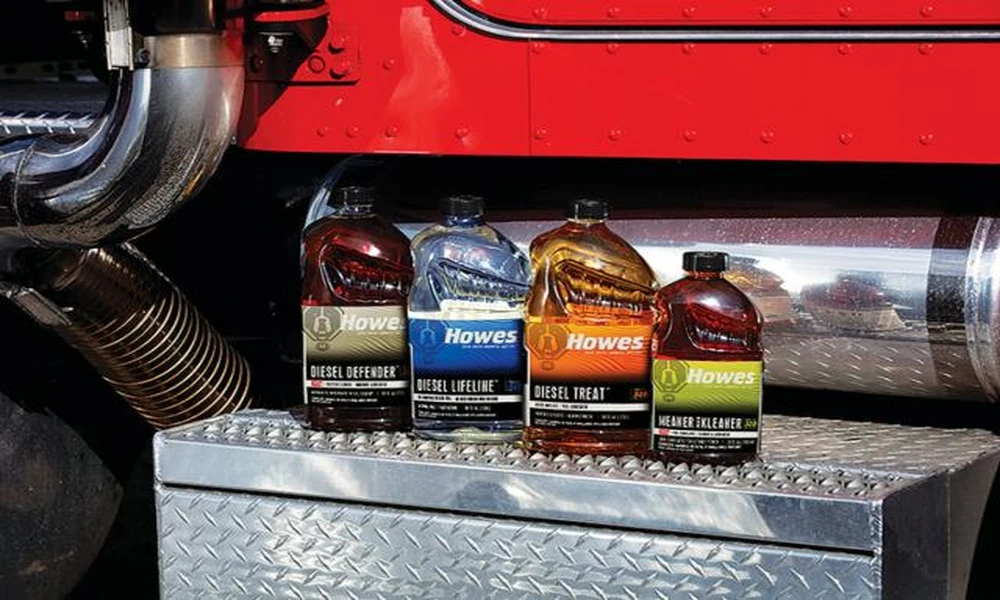
Their flagship product, Howes Diesel Treat, meets each point on my list. The company describes it as North America’s number one trusted anti-gel and fuel conditioner. Here is what it offers:
- It prevents gelling in the coldest climates.
- It adds lubricity to injectors, pumps, and upper cylinders.
- It uses a detergent package to help prevent injector deposits.
- It reduces cold filter plugging and helps cut smoking and rough idle.
- It uses a petroleum-based formula that demulsifies water and pushes it out of the fuel for your water separator to remove.
- It contains no alcohol or harmful solvents.
- It is warranty safe, particulate filter friendly, and effective in all diesel and biodiesel blends, including home heating oil.
Howes also backs Diesel Treat with a Winter Tow Guarantee. If a truck treated with the product fails to keep going in winter, they pay for the tow. Every Howes product also carries a 100 percent satisfaction guarantee, with a refund available when you mail in your original receipt.
How Much You Should Use
The company lists these treat rates for the 15 ounce, 1 quart, and half-gallon bottles:
- Above 0°F: 1 ounce for every 5 gallons of fuel
- Below 0°F: 1 ounce for every 2.5 gallons of fuel
- Cars, pickups, and tractors: Use a double dose
Howes states that overtreating with their diesel products does no harm. I tell drivers to add the treatment before the cold arrives, and to pour it in just before you fill the tank so the fuel mixes well.
Keep a Backup in the Cab
An anti-gel prevents gelling. It cannot reverse fuel that has already reached its cloud point. That is why I suggest a rescue product as well.
Howes Diesel Lifeline fills this role. It changes the melting points of wax and ice crystals so frozen diesel can flow again. It reliquefies gelled fuel and de-ices frozen fuel filters. The company says it often works in about 15 minutes and has proven results in temperatures down to -35°F and beyond.
Lifeline contains no alcohol or harmful solvents, and you do not need to mix it with other diesel before you pour it into a tank or filter. It comes in quart and half-gallon sizes. Diesel pickups and tractors have small filters that can gel even with treated fuel, and a bottle in the toolbox gives those owners a plan if the weather turns bad.
Other Products Worth Knowing
Winter fuel care can go beyond anti-gel. Howes makes two products that fit into a cold weather routine:
- Diesel Defender is a lubricator and injector cleaner with IDX4 detergent. The company says it delivers 2.5 times more lubricity than most competing products, and you can use it all year with Diesel Treat.
- Meaner Power Kleaner is a one-tank system flush. It suits engines with high mileage, an unknown service history, or uneven treatment, and it works well in fall before cold weather starts.
Farms, Fleets, and Bulk Tanks
If you store fuel on a farm or at a shop, look at bulk options. Howes sells Diesel Treat Concentrate for bulk and inground storage, with treat ratios as strong as 1 gallon per 3,000 gallons above 0°F. They also offer Diesel Defender Concentrate. Both come in drums and totes.
A Simple Winter Routine
Follow these steps and your fuel system will have a good season:
1. Replace your fuel filter in the fall.
2. Drain water from your separator.
3. Add Diesel Treat at every fill-up once nights turn cold.
4. Double the dose for pickups, cars, and tractors, and increase the dose when temperatures fall below 0°F.
5. Keep a bottle of Diesel Lifeline in your vehicle.
6. Use Diesel Defender through the season to protect your injectors.
Cold mornings in New England are easier when your fuel is ready for them. Pick a treatment with clear directions and a guarantee, and use it before the first hard freeze.
Diesel Anti Gel Buying Guide for New England Winters

1 Comment
Comments are closed.


[…] engine needs the right fuel supply. A blocked line interrupts that steady flow. This disruption leads to incomplete combustion inside […]