
The global demand for high-performance electric motors has increased dramatically in recent years. Industries such as electric vehicles, renewable energy, industrial automation, and advanced manufacturing require motors that offer higher efficiency, improved reliability, and greater power density. To meet these demands, manufacturers are adopting innovative production methods that enhance motor performance while supporting large-scale production. One of the most important advancements in this area is electric motor hairpin winding.
This technology has transformed the way modern motors are designed and manufactured. By utilizing rectangular copper conductors instead of traditional round wires, manufacturers can achieve higher efficiency, better thermal performance, and increased power output. As a result, hairpin stator winding has become a preferred solution for many of the world’s leading motor producers.
Understanding Electric Motor Hairpin Winding
Traditional electric motors typically use round copper wire that is wound into stator slots to create the electromagnetic field necessary for motor operation. While this method has been effective for decades, it has limitations regarding copper utilization and electrical efficiency.
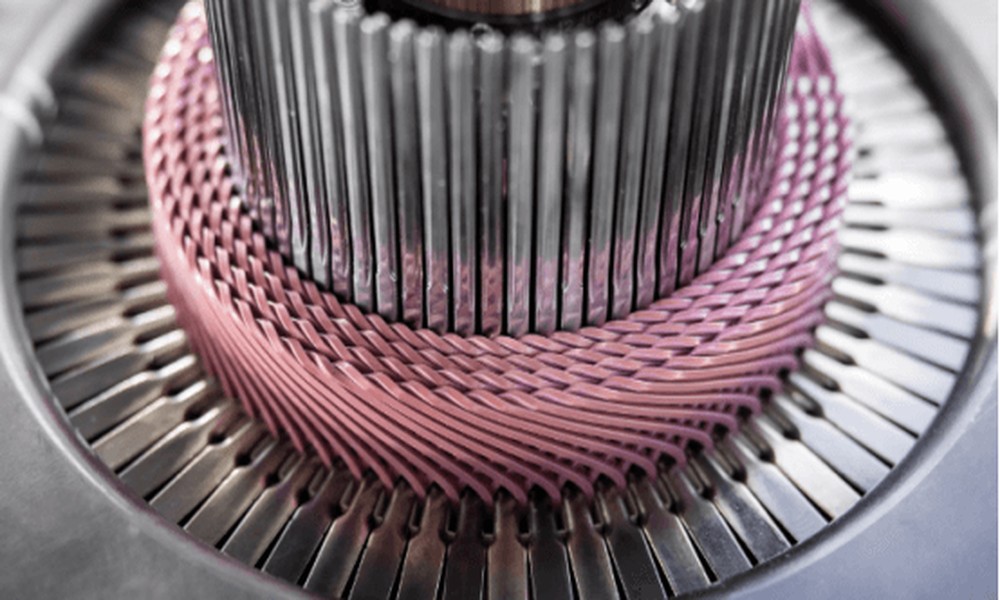
Electric motor hairpin winding uses precisely formed rectangular copper conductors shaped into hairpin-like structures. These conductors are inserted into stator slots and then connected through twisting and welding processes to create the complete winding system.
The rectangular shape allows for more efficient use of available space within the stator. This improved slot fill factor increases the amount of copper that can be incorporated into the motor, reducing resistance and enhancing overall performance.
As manufacturers strive to develop more efficient and compact motors, hairpin winding technology continues to gain widespread acceptance across various industries.
The Importance of Hairpin Stator Winding in Modern Motors
The stator is one of the most critical components of an electric motor. Its winding configuration directly influences efficiency, torque output, thermal performance, and overall reliability.
Hairpin stator winding improves the design of the stator by maximizing copper density within the slots. Higher copper content reduces energy losses caused by electrical resistance and allows the motor to generate greater power from the same physical dimensions.
This advantage is particularly important for electric vehicle applications, where manufacturers seek to maximize driving range while minimizing vehicle weight and size. Improved stator performance helps manufacturers achieve these objectives without sacrificing reliability or durability.
The growing emphasis on energy efficiency has made advanced stator winding technologies increasingly valuable across numerous sectors.
Higher Slot Fill Factor and Improved Efficiency
One of the most significant advantages of hairpin winding technology is its ability to achieve a higher slot fill factor. The slot fill factor refers to the percentage of available stator slot space occupied by conductive material.
Traditional round-wire windings leave gaps between conductors, limiting the amount of copper that can be placed inside the slots. Hairpin conductors, with their rectangular shape, fit together more efficiently and utilize space more effectively.
The increased copper content reduces electrical resistance, leading to lower power losses during motor operation. As a result, motors can convert more electrical energy into mechanical power, improving overall efficiency.
For electric vehicle manufacturers and industrial operators, these efficiency gains can translate into significant performance and energy-saving benefits.
Enhanced Thermal Performance
Heat management is a critical challenge in electric motor design. Excessive temperatures can negatively impact motor efficiency, reduce component lifespan, and increase maintenance requirements.
Hairpin stator winding contributes to superior thermal performance by improving heat transfer within the motor. The compact arrangement of rectangular conductors allows heat to dissipate more effectively compared to traditional winding configurations.
Better thermal management enables motors to operate at higher power levels without overheating. This capability is particularly important in demanding applications where motors must perform continuously under heavy loads.
Improved cooling efficiency also contributes to greater reliability and longer service life, making hairpin winding an attractive solution for manufacturers seeking durable and high-performance motor designs.
Increased Power Density
Modern industries increasingly require compact motors capable of delivering substantial power output. Space limitations are especially important in electric vehicles, robotics, aerospace systems, and industrial automation equipment.
Electric motor hairpin winding helps manufacturers achieve higher power density by maximizing copper utilization within the stator. With more conductive material available to carry electrical current, motors can generate greater torque and power without increasing overall size.
This ability to deliver enhanced performance from a compact package has become one of the primary reasons why many leading manufacturers are transitioning to hairpin winding technologies.
As industries continue to prioritize miniaturization and efficiency, the importance of high-power-density motor designs will only continue to grow.
Improved Manufacturing Consistency
Consistency is essential in modern motor production. Variations in winding geometry or conductor placement can affect motor performance and quality.
Hairpin winding technology is highly compatible with automated manufacturing systems. Advanced equipment can precisely form conductors, insert them into stator slots, and prepare them for welding with exceptional accuracy.
Automation reduces the likelihood of human error while ensuring repeatable production quality. Manufacturers benefit from improved process control, higher production speeds, and reduced labor requirements.
This consistency is especially valuable in high-volume manufacturing environments where maintaining strict quality standards is critical.
Applications in Electric Vehicles
Electric vehicles represent one of the fastest-growing markets for hairpin winding technology. Automotive manufacturers continuously seek ways to improve motor efficiency, driving range, and overall vehicle performance.
Hairpin-wound motors offer several advantages that align with these goals. Their improved efficiency reduces energy consumption, while higher power density enables more compact motor designs. Better thermal management supports demanding operating conditions encountered during acceleration, highway driving, and regenerative braking.
Many modern electric vehicles now incorporate motors featuring advanced hairpin stator winding configurations. As EV adoption continues to expand globally, demand for this technology is expected to grow even further.
Benefits for Industrial and Renewable Energy Applications
Beyond the automotive sector, hairpin winding technology is increasingly used in industrial machinery, robotics, renewable energy systems, and advanced manufacturing equipment.
Industrial motors benefit from reduced energy losses and improved operational efficiency, helping organizations lower operating costs. Enhanced reliability and thermal performance also contribute to reduced maintenance requirements.
Renewable energy applications such as wind power generation and energy storage systems utilize high-efficiency motors and generators that take advantage of hairpin winding capabilities. These systems require dependable performance and energy optimization, making advanced winding technologies particularly valuable.
The versatility of hairpin winding allows it to support a broad range of applications across multiple industries.
Future Developments in Hairpin Winding Technology
As demand for efficient electric motors continues to rise, manufacturers are investing heavily in research and development to further improve hairpin winding processes.
Advancements in automation, robotic handling systems, welding technology, and digital manufacturing are helping increase production efficiency while maintaining exceptional quality standards. Artificial intelligence and predictive maintenance solutions are also being integrated into production environments to optimize performance and reduce downtime.
Future motor designs may incorporate even more sophisticated winding configurations that further enhance efficiency and power density. These innovations will continue to strengthen the role of hairpin winding in modern motor manufacturing.
Conclusion
The evolution of motor technology has created a growing need for advanced manufacturing solutions capable of delivering superior efficiency and performance. Electric motor hairpin winding has emerged as one of the most effective approaches to meeting these requirements.
By enabling higher slot fill factors, improved thermal management, increased power density, and greater manufacturing consistency, hairpin stator winding provides substantial advantages over traditional winding methods. These benefits have made the technology a key component in electric vehicle production, industrial automation, renewable energy systems, and many other applications.
As industries continue to embrace electrification and energy efficiency, hairpin winding technology will remain at the forefront of electric motor innovation, driving the development of the next generation of high-performance motors.