
The color in these parts runs deeper than any spray gun reaches.
Want red carbon fiber? Blue? Gold? You have real options, and none of them require a spray booth. But each method puts the color in a different place, inside the resin, inside the weave, or on the surface, and where the color lives determines everything about how it looks and how long it lasts. Here is what is actually going on inside colored carbon parts.
Dyed Resin: Color in the Matrix
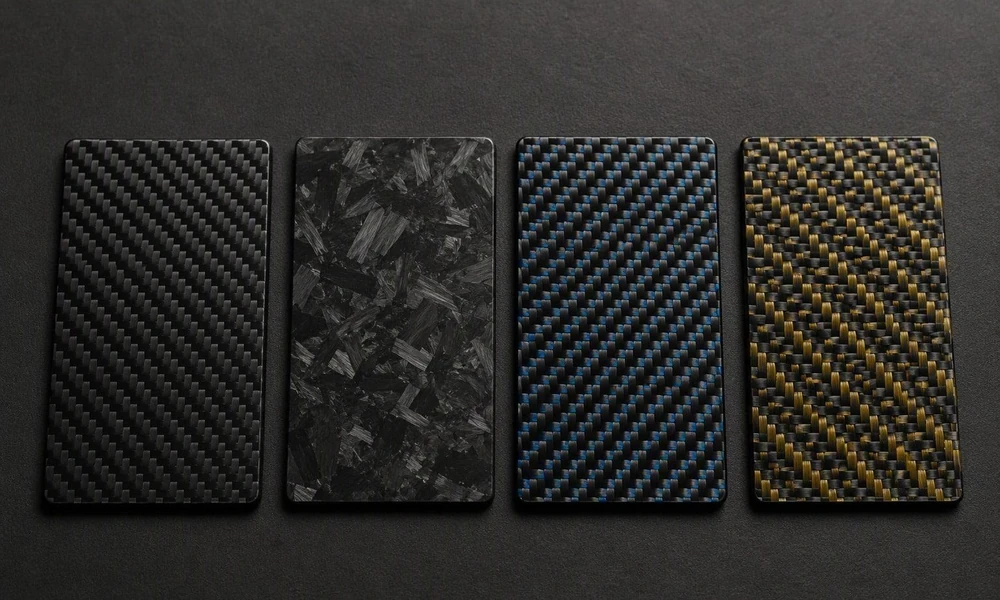
The most elegant method tints the epoxy itself. Pigment is mixed into the resin before layup, so the color saturates the entire part, edge to edge, inside and out. Scratch it and the scratch is the same color. Because carbon fiber is black, dyed resin produces deep, dark, jewel-tone versions of colors, a blood red, a midnight blue, rather than bright candy shades. That dark richness is a feature: it keeps the weave visible and looks expensive in a way bright paint over carbon never quite does.
The limitation is range. Pastels and bright yellows fight a losing battle against a black background. If you want light, vivid color, dyed resin is the wrong tool. For deep metallics and dark candy tones over visible weave, it is the best one. The carbon fiber color guide shows what these tinted parts look like in finished form.
Hybrid Weaves: Color That Is Structural
The second method weaves colored fiber right in with the carbon. Aramid, the Kevlar family, comes in gold, red, and blue, and a 50/50 hybrid weave gives you a checkerboard or striped pattern where the color is literally part of the structure. No coating to chip, no tint to fade unevenly. As a bonus, aramid adds serious impact toughness to the laminate. The carbon Kevlar hybrid breakdown covers the performance side of that pairing; the styling side is a free rider on top.
Hybrid weaves do lock you into a pattern and a specific accent color, and the aramid fibers can fuzz slightly at trimmed edges over time if the resin work is sloppy. Buy from shops that trim and seal edges properly and this never comes up.
Forged Carbon: Pattern Instead of Color
Forged carbon deserves mention here because it solves the same itch differently. Instead of coloring the weave, it deletes the weave entirely: chopped fibers are compression-molded into a marble pattern that is unique to every part. If your goal is carbon that does not look like everyone else’s carbon, forged carbon delivers it without any pigment at all. Many builders combine the two, forged pattern with a tinted resin, for parts that genuinely cannot be replicated.
Paint and Wrap: the Surface Route
Finally, the obvious one. Carbon takes paint and vinyl wrap perfectly well with correct prep, and this is the only route to light, bright, or color-matched finishes. The trade: you lose the weave, and you have bought the world’s lightest canvas for a paint job. For body-color accents, mirror caps, spoiler blades, trim, paint is often exactly right. Just be honest that at that point the carbon is doing structural work, not visual work.
How Each Method Holds Its Color
Time treats these methods differently. Hybrid weave color is fiber, so it lasts as long as the part. Dyed resin color is distributed through the matrix and fades only as fast as the pigment chemistry allows. Quality pigments hold for many years, cheap reds drift. Painted and wrapped finishes age exactly like paint and wrap on any other material: well, if the prep was right. The surface routes are the only ones where the color can ever peel away entirely.
What Each Route Costs
Budget matters, so here is the honest pecking order. Hybrid weaves add the cost of aramid fabric, which is genuinely pricier than carbon fabric, plus standard layup labor. Dyed resin adds modest material cost and almost no labor, making it the best value in colored carbon. Forged adds compression-molding economics: fast cycles but serious tooling. Paint adds an entire paint job on top of the part, and wrap adds a wrap. The surface routes look cheaper until the finishing bill arrives.
Custom color also means custom time. Stock black weave ships from inventory; a tinted-resin or hybrid part is made to order, with lead times measured in weeks. Plan colored carbon like you plan paint. Decide early, order once, and order every matching piece together, because color consistency between production batches is a real thing.
How to Choose Between Them
- Deep, dark color with visible weave: dyed resin.
- Accent color plus impact toughness: hybrid aramid weave.
- Uniqueness without color: forged carbon.
- Bright or body-matched color: paint or wrap.
Colored carbon done through the material ages like carbon. Colored carbon done on the surface ages like paint. Both are legitimate. Buy the one whose aging process fits how you treat the car, and you will still love the part when the novelty wears off.