
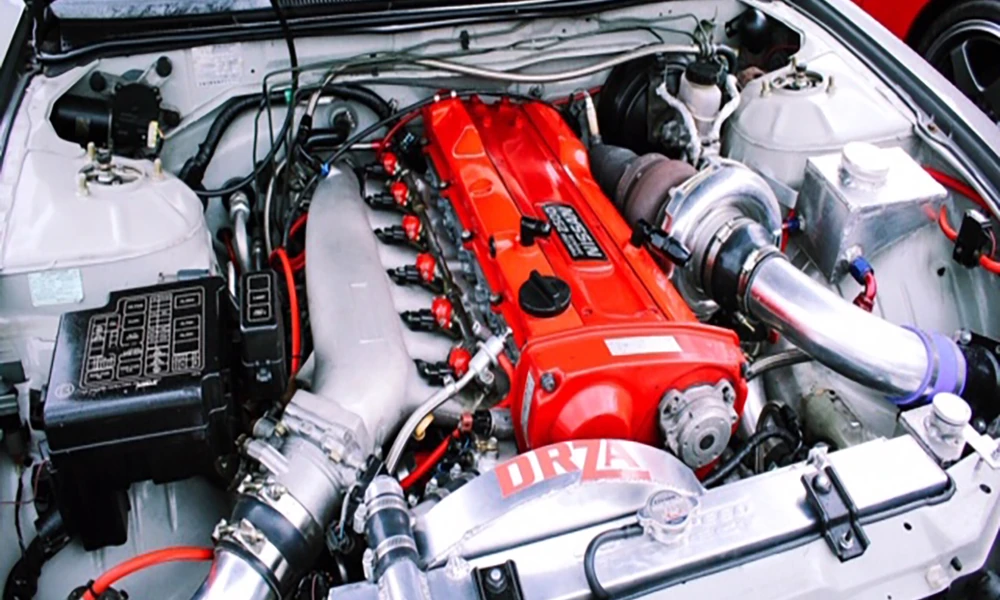

Mention Nissan performance engines and one legend dominates the conversation, drowning out a lineup that is arguably more useful to the average builder than the icon everyone name-drops. That imbalance shapes how people shop, usually to their own disadvantage, and correcting it opens up better options at better prices.
Nissan spent decades building a deep bench of four and six-cylinder engines for its sport compacts and coupes, and the JDM import market makes most of them accessible. Understanding how they actually differ, rather than defaulting to the most famous name, is the difference between a smart purchase and an expensive one driven by hype.
The engine everyone talks about
The RB26DETT from the Skyline GT-R earned its reputation honestly. A twin-turbocharged inline-six with serious tuning headroom, it powered a car that became a cultural touchstone, and its legend is deserved. But legend inflates price, and demand from people who want the name rather than the right engine has pushed RB values into territory that makes little sense for most builds.
For a buyer whose car did not come with an inline-six and whose goals are speed and value rather than badge authenticity, the RB is frequently the wrong tool bought for the right reasons. It is expensive, physically large, and often overkill. The market treats it as the default aspiration, which is exactly the problem.
The engines that quietly do more work
Here is where the landscape gets interesting for anyone browsing the Nissan JDM engine selection with an open mind rather than a shopping list copied from a forum. The SR20DET, the turbocharged four-cylinder that powered the Silvia and its relatives, delivers strong power in a compact, tunable, affordable package. For the enormous population of 240SX owners in the United States, the SR20DET swap became the standard for a reason: it fits, it makes good power, and it costs a fraction of the exotic options.
The naturally aspirated KA24 that came in North American 240SX cars gets dismissed unfairly. It is durable, torquey, and perfectly capable as a foundation, particularly for drivers who value reliability over peak numbers. And the VQ-series V6, found in the 350Z and beyond, brought smooth, potent six-cylinder power to a newer generation of enthusiasts. Each of these serves a real use case that the RB obsession tends to obscure.
Reading the market correctly
The pattern is clear once you step back. A handful of engines carry outsized reputations that inflate their prices, while a broader set of genuinely excellent engines sits available at sensible cost. Smart buyers exploit that gap. They ask what their car needs and what their goals require, then choose the engine that satisfies both, rather than chasing the most storied name and paying a premium for prestige they do not need.
This matters because the import supply is finite and demand-driven. When everyone chases the same famous engine, its price climbs and its availability shrinks, while equally capable engines wait for buyers willing to look past the hierarchy. The builder who understands the full landscape gets more capability per dollar simply by refusing to follow the crowd.
What should actually drive the selection
Start with the chassis and the goal. A drift or track 240SX wants the SR20DET’s blend of power, size, and cost. A reliability-focused build might keep or source a KA24 and modify around its strengths. A builder wanting effortless six-cylinder power in a newer platform looks at the VQ. Only the buyer specifically recreating a Skyline GT-R or chasing that exact character should be paying RB money, and even then only with clear eyes about the cost.
Torque capacity of the intended transmission, physical fitment in the engine bay, wiring and management complexity, and total swap cost all factor in alongside the engine itself. A cheaper engine that requires an expensive transmission and extensive fabrication may cost more in total than a pricier engine that drops in cleanly. The engine price is one line in a larger budget.
The fitment reality behind the hype
Part of why the RB obsession misleads buyers is physical. An inline-six is long, and stuffing one into a bay designed for a four-cylinder involves real work, sometimes firewall or crossmember modification. The four-cylinder options fit their intended chassis with far less drama, which is a large part of why the SR20DET swap became so dominant in the 240SX community. It fit, it made the power, and it did not require reengineering the engine bay to get there.
This is the kind of practical consideration that gets lost when a purchase is driven by reputation. The engine that photographs best in a magazine is not always the engine that installs cleanly in your specific car, and the labor difference between a clean fit and a fabrication project can dwarf the price difference between the engines themselves.
Where the market goes from here
The imbalance is likely to persist and even sharpen. As the iconic engines climb further in value, more builders will discover the less-celebrated options out of pure economics, which is healthy for the market and for those buyers. The SR20DET and its siblings will keep serving the enthusiasts who care about outcomes over bragging rights, while the headline engines drift toward collector territory. For a buyer today, that trajectory is an argument for looking at the practical options now, before demand for them catches up to their genuine merit. The deep bench Nissan built remains the smart shopper’s advantage, and it rewards anyone willing to judge an engine by what it does rather than by how often the internet mentions its name.
The takeaway for buyers
The Nissan engine market rewards knowledge and punishes hype-following. The famous engines are famous for good reasons, but fame is not the same as fitness for your specific build, and paying for reputation you do not need is money that could have gone toward doing the swap properly. The less-celebrated engines in the lineup, the SR20DET above all, deliver most of what builders actually want at prices that leave budget for the rest of the job.
Approach the selection as an analysis rather than a wish list. Map your goals, your chassis, and your budget, then match an engine to them from the full range Nissan built rather than the narrow slice the internet celebrates. Buyers who shop that way consistently end up with faster, more reliable, better-value cars than the ones who bought the name. The deep Nissan bench is one of the real advantages of the JDM market, and using all of it, not just the headline act, is how you extract that advantage.