
Quick Answer
A repair cost estimator is a tool that helps vehicle owners calculate expected repair expenses based on damage type, labor rates, replacement parts, paintwork, and vehicle specifications. Using a reliable repair cost estimator can help drivers understand repair costs before visiting a workshop, compare quotes, and make informed decisions about vehicle maintenance and accident repairs.
Key Facts Table
| Factor | Impact on Repair Cost |
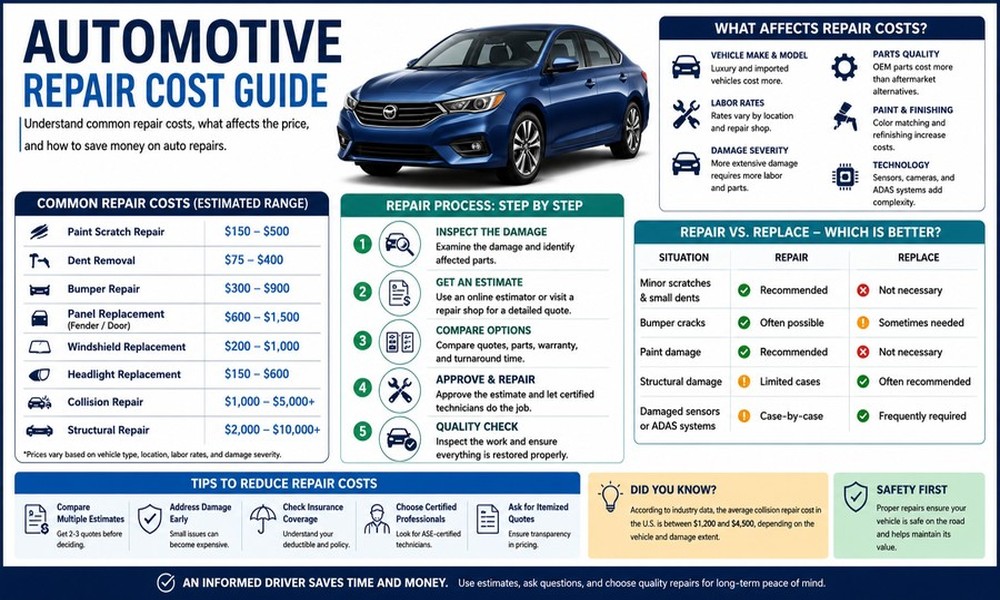
| Vehicle Make & Model | Premium vehicles typically cost more to repair |
| Damage Severity | Larger damage increases labor and parts costs |
| Replacement Parts | OEM parts are usually more expensive |
| Labor Rates | Rates vary by region and repair facility |
| Paint & Finishing | Color matching and refinishing add costs |
| Technology Components | Sensors and ADAS systems increase repair complexity |
| Insurance Coverage | May reduce out-of-pocket expenses |
| Repair Method | Repairing is often cheaper than replacing |
Introduction
Unexpected vehicle damage can quickly become expensive. Whether it is a minor dent, bumper damage, paint scratches, or collision-related repairs, understanding repair costs beforehand can help drivers avoid surprises.
Modern repair estimation tools provide a practical way to evaluate potential expenses before scheduling repairs. By considering factors such as labor, materials, replacement parts, and vehicle type, these tools offer valuable insights into likely repair costs.
This guide explains how repair cost estimators work, what influences automotive repair pricing, and how vehicle owners can make smarter repair decisions.
What Is a Repair Cost Estimator?
A repair cost estimator is a digital tool designed to calculate approximate vehicle repair expenses.
It analyzes information such as:
- Vehicle make and model
- Type of damage
- Affected vehicle components
- Labor requirements
- Paint and refinishing needs
- Replacement part costs
The goal is to provide an estimated repair range before obtaining professional quotes.
Why Drivers Use Repair Cost Estimators
Drivers often use estimators to:
- Prepare repair budgets
- Compare repair shop estimates
- Understand insurance claim values
- Evaluate repair versus replacement options
- Avoid unexpected expenses
Factors That Influence Automotive Repair Costs
Vehicle repair pricing depends on multiple variables.
Damage Severity
Minor cosmetic damage may require only basic repairs, while structural damage often involves extensive labor and replacement parts.
Vehicle Type
Luxury and imported vehicles generally have:
- Higher parts costs
- Specialized labor requirements
- Advanced technology systems
Parts Availability
Original Equipment Manufacturer (OEM) parts typically cost more than aftermarket alternatives.
Labor Costs
Labor rates vary significantly between regions and repair facilities.
According to industry organizations such as the National Institute for Automotive Service Excellence, skilled technicians play a critical role in accurate repairs, particularly for modern vehicles with advanced electronics.
Step-by-Step Guide to Estimating Repair Costs
Step 1 – Identify the Damage
Inspect affected areas carefully.
Common repair categories include:
- Dents
- Scratches
- Bumper damage
- Windshield damage
- Paint damage
- Structural damage
Step 2 – Document the Damage
Take clear photographs from multiple angles.
This helps create more accurate repair assessments.
Step 3 – Use an Estimation Tool
Enter vehicle information and damage details into a trusted estimator.
Step 4 – Compare Professional Quotes
Use your estimate as a benchmark when reviewing repair shop proposals.
Step 5 – Review Insurance Coverage
Determine whether filing an insurance claim is financially beneficial.
Repair vs. Replacement Comparison
| Scenario | Repair | Replacement |
| Minor Dent | Usually Recommended | Not Necessary |
| Paint Scratch | Usually Recommended | Not Necessary |
| Cracked Bumper | Depends on Severity | Sometimes Required |
| Structural Damage | Limited Cases | Often Recommended |
| Damaged Sensor Systems | Case-by-Case | Frequently Required |
In many situations, repairing damaged components is more cost-effective than replacing them entirely.
H2: Common Automotive Repair Costs
H3: Typical Cost Categories
| Repair Type | Typical Cost Range |
| Paint Scratch Repair | Low to Moderate |
| Dent Removal | Low to Moderate |
| Bumper Repair | Moderate |
| Panel Replacement | Moderate to High |
| Collision Repair | High |
| Structural Repair | Very High |
Actual costs vary depending on location, vehicle type, and damage severity.
Actionable Tips to Reduce Repair Expenses
Compare Multiple Estimates
Always obtain at least two or three professional assessments.
Address Damage Early
Small problems often become larger and more expensive over time.
Understand Insurance Deductibles
Review your deductible before filing a claim.
Verify Technician Credentials
Look for technicians certified by recognized organizations such as ASE.
Request Itemized Quotes
Detailed estimates help identify unnecessary charges.
FAQ Section
1. What is a repair cost estimator?
A repair cost estimator is a tool that calculates approximate vehicle repair expenses based on damage details and repair requirements.
2. Are repair cost estimators accurate?
They provide estimates, not final prices. Actual costs depend on inspections and repair shop rates.
3. Can I estimate collision repair costs online?
Yes. Many online tools provide preliminary estimates based on vehicle and damage information.
4. What affects repair costs the most?
Damage severity, labor rates, vehicle type, and replacement parts typically have the greatest impact.
5. Should I repair or replace damaged parts?
Minor damage is often repairable, while severe structural damage may require replacement.
6. Are OEM parts worth the extra cost?
OEM parts typically provide manufacturer-approved fit and performance.
7. Do insurance companies use repair estimates?
Yes. Repair estimates are commonly used during claim evaluations.
8. Can a repair estimator help negotiate repair quotes?
Yes. It provides a useful benchmark for comparing estimates.
9. Why do luxury vehicles cost more to repair?
Premium materials, specialized parts, and advanced technology increase repair complexity.
10. How often should repair estimates be updated?
Whenever additional damage is discovered or repair requirements change.
Key Takeaways
- Repair cost estimators provide valuable budgeting insights.
- Labor, parts, and vehicle type significantly affect costs.
- Comparing multiple estimates helps reduce overspending.
- Early repairs often prevent larger expenses.
- Professional inspections remain essential for final pricing.
- Insurance considerations can influence repair decisions.
Conclusion
A repair cost estimator is one of the most useful tools available to vehicle owners seeking transparency before beginning repairs. By understanding the factors that influence pricing and comparing estimates from qualified professionals, drivers can make informed decisions and avoid unexpected expenses.
Whether dealing with minor cosmetic damage or significant collision repairs, using a trusted estimator alongside professional assessments provides a clearer picture of repair requirements and potential costs. Combining accurate estimates, certified technicians, and informed insurance decisions is the best approach to managing automotive repair expenses effectively.